In March 2016, an Italian senator proposed a bill that would require schools in Italy to teach an hour of wine culture per week to students, starting at age 6. The senator explained that the intent is to help children gain a better understanding of the cultural importance of wine in Italy (and not, of course, to encourage them to drink it at such a young age).
Some American parents may be alarmed by this early introduction of alcohol into their children's lives. However, research shows that children learn what kinds of foods and drinks are enjoyed in their culture as toddlers regardless of whether adults are intentionally teaching them. Through observing how we consume wine - whether it makes us happy or sad, whether we drink alone or with others, whether we enjoy it with food or not - children internalize these cultural practices, which (on average) can manifest later in their own lives.
My parents bought into this mentality when I was child, often pouring a glass of wine at the dinner table and even slipping me a sip occasionally. My parents portrayed wine as a grown-up privilege to be enjoyed (in moderation) during celebrations and with a particularly juicy steak. As we ate, talked and laughed over my Dad's top-notch cooking, the wine became imbued with a delicious sense of togetherness, joy and love.
For my parents, wine became a gateway into American culture. Most of the bottles we drank were from the States (mainly California), and just like action movies and country songs, Mom and Dad collected knowledge about wine to casually drop in conversations with co-workers and neighbors. Wine also became a part of our own family culture. As I got older, we began sampling varietals from around the world, from the barolo of Italy to the shiraz of Australia. We began a ritual of sitting down in front of the TV for a dinner and a movie and popping open a bottle. Often, the movie-watching and wine-drinking experiences would merge in my memory. Rom-coms and rose. Jackie Chan and chardonnay. Film noir + pinot noir. Watching movies like Sideways and Bottle Shock were doubly beneficial, as we learned about Alan Rickman and Chardonnay all at once. Wine was a way for us to demonstrate belonging in a new country and way of life.
While I am not sure what ultimately became of that Italian wine-ducation bill, I agree with that Senator when it comes to teaching children early about the wonders (and warnings) of wine. Wine exploration was such an important part of my growth and development, and when I have kids, I am excited to offer them the same.
Source 1
Monday, March 19, 2018

A few interesting wine labels
Of all the wines people have poured this quarter, I enjoyed those from ShareASplash most. To be clear, many of the wines poured really did taste good. However, ShareASplash was uniquely approachable. Its designs were modern, playful, and unintimidating, and the actual beverage tasted much better than I would've expected for that price point. I found myself ordering multiple bottles of Angels and Cowboys and Cannonball after class, and have since brought these bottles to several dinners where my friends have enjoyed them and gone home to order more bottles of their own.
I wanted to see if there were other similarly interesting labels in the market. Although these wines didn't receive great reviews on taste, here were a few that I was amused by...
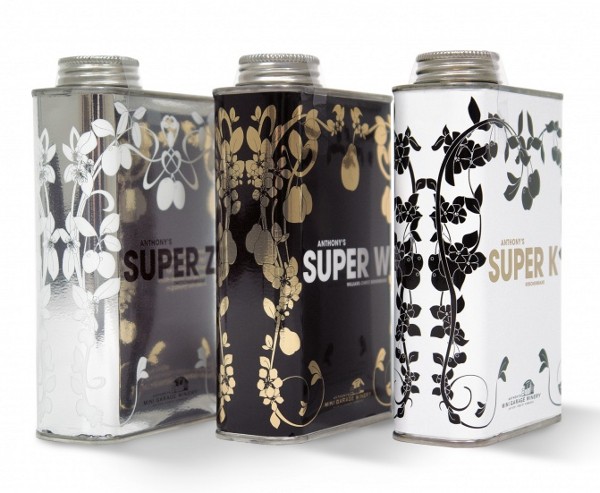
Mini garage winery's turpentine can-like hip flasks
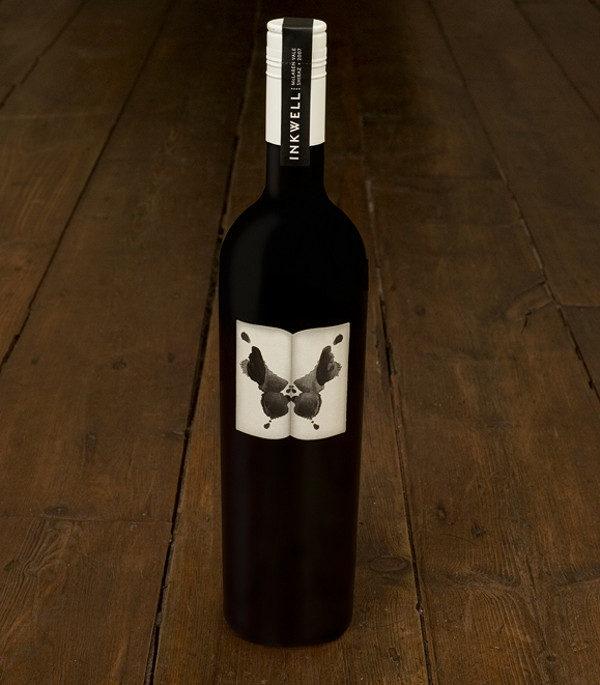
Inkwell Wine's Rorschach-inspired wine bottles that have you think before you drink
Neleman's wine that proudly proclaims its worth

DQ Wine's labels which have you peel strips off to uncover more information


Lar De Maia's bottles that come with a small sheet of paper with tasting notes, so users can scribble down their own assessments


And Finca de la Rica that makes you really work for it!

Sunday, March 18, 2018
What if we have too much rose?
I enjoyed everyone's presentations on Thursday, and - like Becca - found Michael very thoughtful and engaging.
As I sat there listening to his statistics on Rosé and Frosé, and watched as numerous teams shared their new twist on the beverage (cans, juice boxes etc), I found myself wondering if this was a bubble waiting to burst. If so, when would the bubble burst and what would the producers do with all that excess wine?
A quick google search suggests that most consumers use their leftover wine in food; they marinate meat in it, poach pears in it, bake desserts, create vinegar/sauces/reductions... you get the idea. However, producers would arguably have a tougher time adopting a similar strategy. Creating a new food product in-house would mean building up new production facilities, and launching new branding activities. For wine producers without a presence in grocery, this would arguably require new sales and distribution capabilities as well. Even creating a new food product through a joint venture would be problematic, as it would require them to establish partnerships with a new set of food companies with whom they may never have worked.
One interesting article I stumbled on spoke about Gose - a pale yellow to deep gold beer that is slowly gaining popularity in craft beer circles. According to the article, this beer - unlike its other cousins -pairs really well with rosé to form (you guessed it), Gosé. This drinks surprisingly well in winter (or so the article claims!). If rosé were ever to hit a saturation point, I wonder if there would be an opportunity for thoughtful rosé producers to quickly create a new beverage in partnership with some of their craft beer cousins. This would save them a lot of the time and effort they would otherwise have needed to put into branding and distribution, since the responsibility would arguably lie with the craft brewery instead.
For wineries like Long Meadow Ranch that sell food supplies in addition to wine, and deliver a surprise with each wine club shipment, another possibility would be to create packaged sauces and marinades with the leftover wine. They could then include that as the bonus item of the next shipment, and use this as an opportunity to delight customers.
That said, I hope rosé doesn't go out of style any time soon. I for one am still looking forward to a few more summers of #roséallday.
Roségence
Class on Friday made me realize that I have no idea why the rosé craze has grown so much. I am fully a part of it (a lover of rosé who has liked a million photos of someone in sunglasses, on a swan float, with a glass), but I couldn’t tell you why I love it absent of all of its status as a fun, summer, Millennial drink. So what has made it the craze it is?
Pantone selects, sometimes years in advance, a “color of the year” (fun fact – I used to work at Sephora and the office dress code, Monday through Thursday, was that we could only wear red, white, red, grey or the Pantone of the year). In 2016, for the first time, Pantone selected two colors of the year: serenity (aka baby blue) and rose quartz (aka, Millennial pink).
The pale pink color of rosé, and that being the color of a generation, is certainly a huge contributor of the rise of rosé’s popularity. Wine makers are certainly responding, where pink wine used to be something only made as an afterthought, it is now being produced with the same quality considerations and nice whites and reds. However, with rosé becoming a category of its own (e.g., “I’m not ordering a chardonnay, or a cab, but a rose”), I think this this is also emblematic of a new trend we’re seeing in “inconspicuous consumption.” The big labels of the 90s and 2000s are very rare to see anytime, and those that are the taste makers are wearing things that are totally unidentifiable outside of those in the know (e.g., Allbirds – there is basically no labels, and are only really identifiable if you already know the brand).
Finally, a question I’m still left with is something I learned from a trip to Darcie Kent Vineyards (the amazing Amanda Kent’s family vineyard – where she led our tasting!). Referring to wines by their varietals is much more of a new world concept, versus referring to wines by their region (e.g., a Bordeaux) is more common for old world wine. I wonder if “rosé” is at all a foreshadowing of the integrating of these two worlds, or if it really is just all about the color.
Friday, March 16, 2018
wYne Combinator
After all the great presentations yesterday, I started
thinking about whether there were winery incubators. I imagine that many
passionate wine drinkers and business people that want to create new wine
brands may not have access to equipment, funds, winemaker talent, and industry
relationships. On the other hand, there may be many talented winemakers coming
out of places like UC Davis that would like to own their own winery and do not
want to give up creative control, but don’t have brand, marketing, and
operations experience. In many ways, the problem seems akin to GSB entrepreneurial
students wanting access to engineering talent and venture funding. There may
also be high net worth individuals in the wine industry that would like to
support emerging wine brands and invest in the next great winery or wine
company.
While brand marketing agencies exist for the wine industry
and there are certainly companies incubating their own brands, I do think there would be a business opportunity to
support and invest in new wine entrepreneurs, perhaps creating the Y Combinator
for wineries (wYne Combinator?).
I looked into this and some incubator-like programs to exist
to support wine entrepreneurs. For example in Walla Walla, the state government
and port authority funded a “wine incubator neighborhood” near the Walla Walla
Airport in the early 2000s, originally to support graduates from Walla Walla
Community College’s enology and viticulture program. Dr. Myles Anderson of
Walla Walla Vintners and Norm McKibben of Pepper Bridge Winery helped to design
the 5-building row of wineries. Each building was constructed to meet the
requirements necessary to operate a stand-alone, 2,000-case production winery
and tasting room. With a cheap monthly rent that slowly increases over time, the
fledgling wineries are allowed a maximum stay of six years.

The five incubator wineries in the Walla Walla Regional Airport wine district currently include Palencia Winery, Walla Faces, Corvus Cellars, J&J Vintners and Eternal Wines.
“The Incubator program put everything I needed in one place,
a marketable location, existing nearby winery businesses and a thoughtfully
designed production facility I could grow from,” says Victor Palencia, who
earned his winemaking degree from Walla Walla Community College in 2005. “Since
I didn’t have to make an immediate investment into retrofitting a building, I
was able to focus my energy on growth and expansion, quadrupling production in
the first year.”
Tasting room guests also appreciate supporting the incubator
wineries and tasting the wine right where it’s made. With low overhead, these
wineries are able to spend their cash flow on the best grapes and make higher quality
wines faster. Removing some of the barriers to starting a wine business may
allow investors to see proof of concept more quickly and double down with the
winners.
A more hands on approach, talented winemaker Bartho Eksteen
has developed the Wijnskool Entrepreneur Support Program (WESP) as an incubator
initiative on his new farm in the Hemel-and-Aarde Valley in South Africa.
With the first intake in 2015, eight businesses were
selected to be supported for three years. Aspiring wine entrepreneurs submitted
a business plan with an application to Eksteen. The program supports the entrepreneurs
in the areas they need, including funding, technical support, administrative
and marketing department development, personal development and more.
I don’t think it’s a coincidence that you see these types of
programs emerging in the regions that many of us picked for our midterm
assignments. Washington and South African wine regions are growing quickly, perhaps
due in part to a receptive and supportive climate to wine entrepreneurs. I’m
curious how the class feels about a “wYne Combinator” in Silicon Valley. Would
it succeed? Why or why not?
Cheers!
Yesterday’s presentations were rad all around.
I found Michael’s to be one of the most engaging and thought
provoking of all quarter. In fact, I texted my old boss from the distillery
afterwards and told him he needed to start a rosé company next. Wearing my distillery
hat, it was also exciting to see how much market space spirits is eating up.
Many of the final presentations had something in common: a
millennial consumer. Further, a millennial consumer very reminiscent of a GSB
student. This oftentimes seems to be a theme for projects here at school, and I’m
curious how much of it is our propensity for designing products that we
ourselves like to use, and how much of it is the fact that we represent growing
segments of many markets.
I appreciated that everyone put up with my antics throughout
the quarter—I was glad to be in a room full of good-humored humans who didn’t
mind a bit of fun and games amidst all the learning.
Because of my time at Kings County, I know more about
whiskey than most middle aged men (who are oftentimes the ones that think they
know the most). For a long time, I’ve been excited about learning more about
wine. Through the cases, the speakers, and the class discussions, I’ve come to feel
more confident than I did at the beginning of the quarter. I’m excited to
continue learning—and drinking, of course.
Cheers!
Subscribe to:
Posts (Atom)